Passenger capacity is the number investors use to judge a tower ride before they have seen one operate. It is also the number most often misread. A 32-seat ride and a 16-seat ride do not differ by a factor of two in profit, because the seats only matter to the extent that guests are waiting to fill them.
This article explains how capacity actually feeds into the profitability of a 42m sky flyer ride for sale, where the common assumptions break down, and how to choose a seat count that matches the demand the park can realistically deliver.
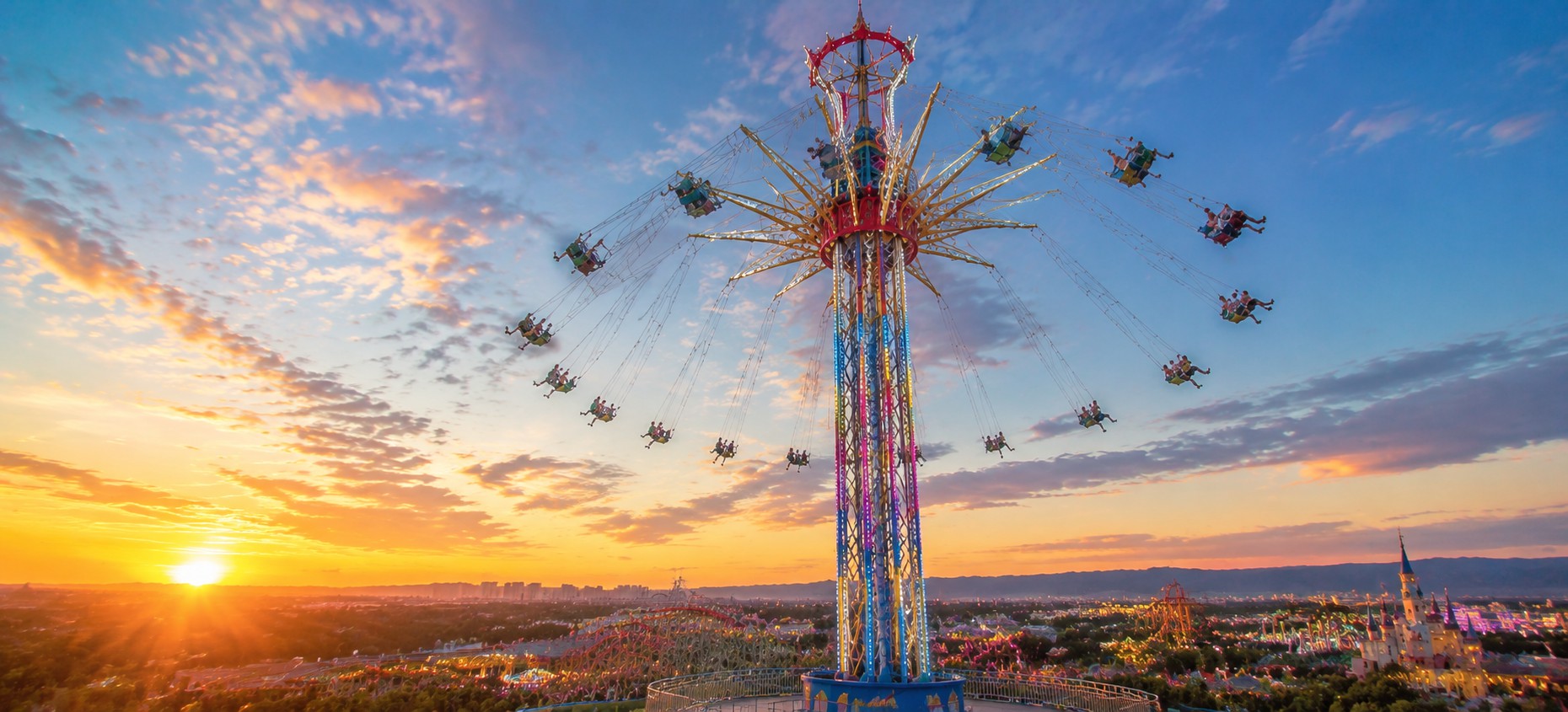
1. Capacity Is Not Revenue
Theoretical capacity is the number of passengers a tower can carry if every seat is filled on every cycle, all day, without interruption. Actual revenue depends on how many of those seats are occupied. In a park that receives 1,500 visitors a day, a 32-seat tower is unlikely to run full on every cycle outside a few peak hours.
The right way to think about capacity is as a ceiling. It limits what is possible on the busiest day, and it protects the park from turning away guests who came specifically for the ride. It does not by itself create revenue.
2. The Three Capacity Numbers
Three different figures are usually quoted for the same ride, and confusing them leads to bad decisions. The first is seats per cycle, which for this class of tower is typically the headline number. The second is cycles per hour, which depends on loading and unloading time, restraint checks and dispatch discipline. The third is hourly throughput, which is the product of the first two.
A 32-seat vertical swing ride running a four-minute cycle has a theoretical throughput of 480 passengers per hour. Reduce the cycle to three minutes and the same ride reaches 640. The difference comes from operations, not from the machine, which is why staffing and platform design matter as much as seat count.
3. Seats, Cycle Time and Hourly Throughput
Adding seats increases capital cost, structure weight and loading time. In most tower designs, a larger gondola takes longer to fill and check, which partially offsets the extra seats. The throughput gain is real but smaller than the seat count suggests.
The practical way to compare two configurations is to calculate both at realistic loading rates — say 90 per cent occupancy on a busy day and 50 per cent on a normal one — and multiply by the number of cycles the crew can achieve. A larger ride that never fills is simply a more expensive way to carry the same number of people.
4. Demand: The Number That Actually Limits Revenue
Revenue is capped by whichever is smaller: capacity or demand. For most parks, demand is the binding constraint. That means the capacity decision should be driven by the park’s peak attendance, its ride participation rate and the queue length it is willing to tolerate.
A park that expects 2,000 visitors on its busiest day, with 20 per cent riding the tower, needs to move 400 passengers across the operating day. That is well within the reach of a smaller configuration, and it means a 32-seat flying swing tower may be over-specified for the site — unless the ride is also the park’s flagship landmark and the queue itself is part of the experience.
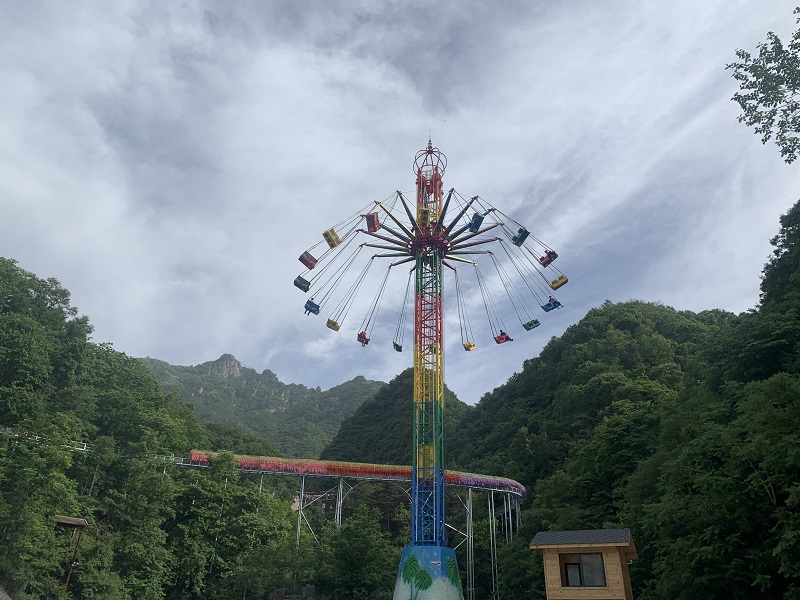
5. The Mismatch Problem
Two mismatches cause most of the disappointment. Oversized capacity produces a ride that is expensive to buy, inspect and maintain but rarely fills, which drags the return on capital. Undersized capacity produces queues that suppress participation and damage the guest experience, especially at weekends when the park’s reputation is being made.
The test is to model the peak day at the planned capacity and see what the queue looks like. If the wait exceeds the park’s own standard for a premium attraction on more than a handful of days a year, the ride is too small. If the average occupancy never exceeds half, the ride is too large.
6. Capacity and Operating Cost
Seat count barely changes the operating cost. A larger tower uses a slightly more powerful drive and may need an extra loading attendant, but the annual inspection, insurance, licensing and maintenance schedule are broadly the same as for a smaller unit of the same height.
That is the core of the capacity argument: the fixed cost of running a tower is largely independent of how many seats it has. If demand exists to fill the larger ride, the incremental cost of the extra seats is small relative to the extra revenue. If demand does not exist, the extra seats add capital cost and buy nothing.
7. Capacity and Capital Cost
On the capital side, capacity does increase cost — a bigger gondola, more restraint sets, a stronger rotating structure and a more powerful drive. The equipment price moves accordingly, and the foundation and installation costs move with it.
That is why the capacity decision should be made before the quotation is requested, not after. Suppliers quote what they are asked for, and a park that changes its mind after the design stage pays for the redesign as well as the upgrade.
8. A Worked Comparison
Illustrative numbers for two configurations, assuming a four-minute cycle and 250 operating days:
- 16-seat model: theoretical throughput 240 per hour
- 32-seat model: theoretical throughput 480 per hour
- Park peak-day demand: 400 riders
- 16-seat model at 10 operating hours: capacity 2,400, demand 400 — comfortably sufficient
- 32-seat model at 10 operating hours: capacity 4,800, demand 400 — heavily over-specified
On that demand profile, the smaller ride earns almost the same revenue while costing less to buy and run. The larger ride only becomes the better choice if the park expects attendance to grow substantially, or if the tower’s role is to be the visual landmark that a 32-seat gondola at 42 m provides.
9. Choosing the Right Capacity
Decide capacity from three inputs: the park’s peak-day attendance, the participation rate the ride is expected to achieve, and the maximum queue the park is willing to accept. Then choose the smallest configuration that clears the peak, and only move up if the landmark value justifies the extra capital.
A sky flyer by Dinis can be configured and quoted against those inputs rather than against a standard catalogue size. Dinis has supplied tower rides, ferris wheels, swing chairs and complete park equipment packages from Zhengzhou, China for more than twenty years. As a ride manufacturer, the company provides the capacity data, structural documentation and maintenance schedule needed to compare configurations properly.
The structure itself is normally fabricated from steel with hot-dip galvanization and a topcoat, which is why a larger unit also carries a larger surface-protection cost. Capacity decisions are rarely just about seats; they determine the whole cost profile of the ride.
Current project reference: https://www.dinisdreammyland.com/products/42-m-sky-flyer-ride-for-sale/